This is a blog with spoiler free reviews. Most will be Fantasy, Science Fiction, and Horror, but there will be some books in other genres, including the occasional Non-Fiction review. There is an ongoing series of Cover Reveal Round-Ups, and sometimes I'll write an article on something that interests me.
Showing posts with label Iain M. Banks. Show all posts

18 July, 2013

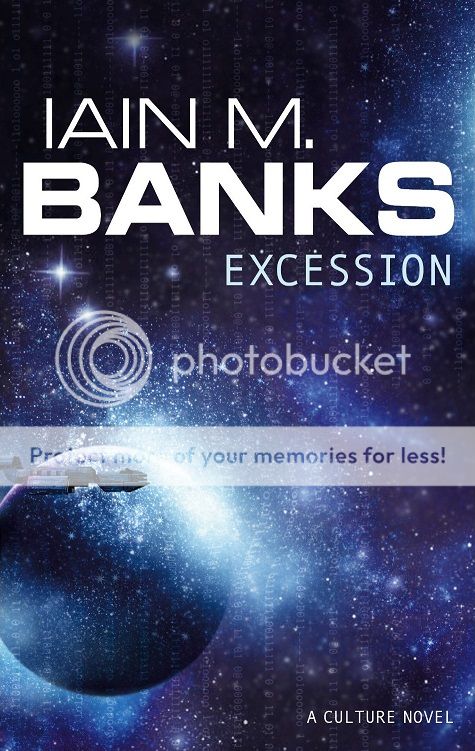
REVIEW: EXCESSION

Spaceship image by Bruce Coleman
Cover design by Blacksheep

EXCESSION
A CULTURE NOVEL/
CULTURE BOOK FIVE
BY
IAIN M. BANKS

ISBN: 978-1-85723-457-2
Pages: 451
Publisher: Orbit
First published: 13 June 1996
This edition published: 15 May 1997

On the cover:

Two and a half milennia ago, the artefact appeared in a remote corner of space, beside a trillion-year-old dying sun from a different universe. It was a perfect black-body sphere, and it did nothing. Then it disappeared.

Now it is back.


   It's really strange sitting down to write this review. When I read this book, only two months ago, the author was still with us. Granted, the news had broken that Banks had cancer and was not expected to live long, but there was talk of some faint hope. That hope is gone now, along with undoubtedly one of the best Space Opera writers that has ever lived.
   But as I read the review notes I took while I read this book, in preparation to write this words, the one thing that became clear to me is that Banks will never be completely gone. The stories he wrote will always be with us. People who are yet to be born will one day discover, and fall in love with, the Culture, and everyone and everything Banks created to bring it to life.
   Iain M. Banks is not alive anymore, but he's not gone. A part of him will always be with us in the stories he has given us.

   Excession is the fifth Culture book. And although they are not a series in the traditional SFF sense, I have noticed that there is the feeling of a progression in the series as I read it. Banks is taking us deeper into the Culture as the series progresses, and he does it through focusing on different aspects of the Culture.

   Characters have always been rather important in Banks' novels, and here some of the most important ones are the Minds, the artificial intelligences who inhabit ships, space stations, and planetoids in the Culture universe. They really come to life in this novel. The Minds have been present in previous Culture books too, but here they become much more important, in many ways they take over. 
   There are also quite a few human (and alien) characters in the novel, and Banks manages to integrate their stories very nicely with that of the Minds. The interaction, and relationship between the artificial Minds and the living creatures is done extremely well.
   The characters are very interesting, in some ways they are too interesting. There's not that many of them, but enough that it feels a bit like the reader is shortchanged with not getting to follow more of their story. Of course that is a testament to how well developed they are rather than that they feel shallow.

   There are several strands to the story at the beginning of the novel. Banks manages to create some extra suspense, for me at least, by not giving away which of the story lines that is "most important" one. It's a type of narrative structure that can be annoying to a reader, but that works very well here.
   Banks opens the book in such a way that you are very quickly hooked in to the story. As more players are introduced they become one more hook for the reader to get snagged by. And once you start to get into this story you are pretty much lost in it. But there is also quite a bit of fragmentation to the story because of its structure, and that it isn't always told linearly makes it more complex to follow than the average Space Opera adventure.

   It's the complex structure of the story that really makes it interesting in my opinion. Banks way of writing what happens in bursts rather than a straight line adds both suspense, and another layer to what is going on. Sometimes it can be a bit jolting when the narrative makes a sudden jump in time, but these jumps are not random, they always come when they can give something more to the narrative than just a distraction.
   The weaving together of the different story lines and layers is Banks' greatest accomplishment here. Although at times fractured, it becomes clear that this is very much a whole with many strands to it. It's how everything meshes together in a way that feels natural in the end that makes this such a great story.

   I've mentioned great characters and a great story. And this comes together to create something that feels like it is much more than what was really put in in the first place. To use a cliche, this is greater than the sum of its part.
   This does however lead to what I feel is the only real flaw in the novel, the ending. The build up is so good, and the story so captivating that when it ends it feels disappointing. It just feels that there should be more to it, that it should have more impact than it actually does. It's not really a huge problem, but be aware of that this really is a case of the journey being more important than the destination.

   I really like Banks' Culture stories, and despite the flaw I mentioned above this is no exception. This is Space Opera with real depth to it. More character based and philosophical than action-filled, but that is certainly a strength not a weakness.
   This is of course essential to fans of Banks' Culture books, and likewise for those who wants a cerebral background to their Space Opera. It also has a somewhat "literary" leaning to it, so it would be a nice starting point to Science Fiction for someone who comes from that reading background.

REVIEWS: You can find my reviews of the previous Culture books here.

26 September, 2012

COVER REVEAL ROUND-UP (VI)

  Quite a few covers this time, as I'm trying to catch up with some of the covers I've missed in previous posts, and there's some very recent reveals as well.


First two covers for the same book, Terry Brook's Bloodfire Quest. At the top the US one, and at the bottom the UK one.


   These are two very different covers. And I don't think there's much doubt that the UK one, with art by Stephen Youll, is the superior one here. (Only too bad we get that annoying "sticker" on it.)
   I like the cover a lot. It's a classic fantasy cover, but it's still not a design that has been done to death. And the creature whose skull that is looks really interesting. The book is out 19 March 2013.


This is the cover to the third Department 19 book by Will Hill, Department 19: Battle Lines. It fits very well with the two previous ones, and I like the style of them. Having read the first book, and having the second on my TBR pile, this is a book I'm looking forward to. It's out 28 March 2013 in the UK.


The follow up to Alchemist of Souls, The Merchant of Dreams, by Anne Lyle. Art by Larry Rostant. Having just read the first book, I can say that this cover very much captures the feel of the world. It's also a book I look forward to getting my hands on.


Another book two, this time The Glass Republic by Tom Pollock. I like the fact that this cover, as the cover to book one The City's Son, is really stylish and simple.


Pantomime by Laura Lam, with cover art by Tom Bagshaw, is out from Strange Chemistry in February 2013. This is a really intriguing cover, and it looks really good. Having been inspired by the cover to read the synopsis/cover copy on the publisher's website, I'm even more interested. So there's no doubt that for me this cover grabs attention.


Another cover from Strange Chemistry. This time it's by Steven Wood for A. E. Rought's Broken. This cover looks really good, although not very original in my opinion. But despite being of a woman in a dress, I think the background and title makes it stand out a bit. And again it's a book I had to find out more about.


Rounding up the trio of Strange Chemistry covers this time is the one for The Holders by Julianna Scott. I like covers of this type, those with a mysterious/magical object and nothing much else. Although I must say that it reminds me of the movie Romancing the Stone. That statement needs a bit of explanation...The Norwegian title of Romancing the Stone is Kampen om den grønne diamant, which translates as The Battle for the Green Diamond.


The Mad Scientist's Guide to World Domination is a title that really grabs your attention. And I think the cover fits that title perfectly. I'm very curious to see what this anthology, edited by John Joseph Adams and out from Tor next year, brings to the table.


And while we are on the subject of mad scientists, here's the cover for The Mad Scientist's Daughter by Cassandra Rose Clarke, coming from Angry Robot in February 2013. I like this cover, not sure why exactly but it just sort of calls to me.


From Tor we have the cover for Brandon Sanderson's Young Adult novel The Rithmatist with art by Christopher Gibbs, out in May 2013. Looks very Stempunk-y to me. Not a bad cover, but it still feels a bit meh to me.


This cover for Joe Hill's NOS4R2 is really good, I like it a lot. No information on the novel yet, but the title obviously refers to vampires, and the license plate says 1931, so I'm guessing it will be set at that time.


I've already had a cover for this book up here. I'm not sure if the previous cover is the US one or an earlier version, but this is the UK cover for Banks' new Culture novel, The Hydrogen Sonata. There's nothing really special about it, but it fits in perfectly with the previous Culture covers from Orbit, so I like it.

That concludes a rather long cover reveal post. I hope you find at least some of these covers interesting. And as always I welcome any comments you have.

21 April, 2012

COVER REVEAL ROUND-UP (III)

Here are some covers that have been revealed in the past two weeks. It's not all I have seen, but ones that have caught my eye.


   This is the Orbit (US) cover of the new Joe Abercrombie book, it's out in hardcover in November. I think the cover is OK, but the font is pretty big and obscures much of it. You can read more about this cover in a post by Lauren Panepinto here.
   NOTE: The UK edition will be out from Gollancz towards the end of September.


   This i an omnibus edition of Maurice Broaddus' trilogy, coming in September in the US and October in the rest of the world from Angry Robot Books. The cover is by Joey HiFi, and like the rest of the covers I have seen by him this is a really good one.


   A new Culture novel by Ian M. Banks, coming in October from Orbit. I really like Banks' Culture novels, and am excited that there is a new one coming this year. With luck, and maybe a time-turner, I will be caught up with the series when this one comes out. The cover looks pretty good, suitably futuristic.


   This cover by Ana Juan is for the second Fairyland novel by Catherynne M. Valente. It looks great, and will fit in perfectly with the cover for the first book on my shelf. The style of both these covers are really great, and as I have the first one I can attest that these look even better in real life than they do as a photo.


   From Night Shade Books we have the cover for The Book of Cthulhu II, edited by Ross E. Lockhart. The Cthulhu silhouette in the background is just awesome. Really shows off the best side of Cthulhu, at least the one you can see without going crazy in the process.

17 February, 2012

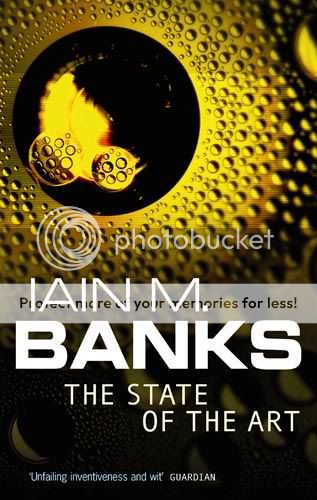
REVIEW: THE STATE OF THE ART

Cover image: Imagestate
Cover Design: Blacksheep

THE STATE OF THE ART
CULTURE BOOK FOUR
BY
IAIN M. BANKS

ISBN: 978-1-85723-030-7
Pages: 216
Publisher: Orbit
First published: 14 March 1991
This edition published: 27 May 1993

NOTE: This is a collection, but it is marked as a Culture book on Banks's website, and I'll go with what the author says .

   As usual I'll give my review of each story before saying something about the collection as a whole.

ROAD OF SKULLS

   This is a brilliant short story. It evokes a great image of the road of the title, and it may be an image that will stay with you. The story is pretty basic, but it ends in a way that wasn't expected. And that ending made me laugh. A great start to the collection.

A GIFT FROM THE CULTURE

   Wrobik Sennkil is in debt, and is given an offer he can't afford to refuse. Banks manages to put quite a lot into this tale, set in the Culture Universe. We get enough information about the main character that we understand his background, and we see his motives. There is also quite a lot of suspense involved here. This is not a bad introduction to the Culture books, should you feel the need to try out a shorter story before you go on to the novels. It works well as a short story on its own, but it is also a great story for those, like me, who enjoy Banks's Culture novels.

ODD ATTACHMENT

   This is a somewhat strange story. On the surface it's about a herder who's unhappy in love. But Banks has added another element to it that makes it so much more than that. I found it a very interesting story, and as far as Science Fiction short stories go I have to say this is among the ones I've enjoyed the most.

DESCENDANT

   A man is alone on the plains of a planet. Inside his sentient space suit he's trying to reach help. Banks manages to get across the loneliness of walking across a deserted planet beautifully. Not the most suspenseful story I have ever read, but despite guessing early on where it was going I liked it a lot thanks to Banks's great writing.

CLEANING UP

   When mysterious capsules start to spontaneously appear on earth the Americans are at the forefront of making use at what is inside them. This story is at times so surreal that it is a joy to read. Banks shows off a great sense of humor while telling an interesting story. This is great as it stands, but I would have loved to see it expanded to novel size. But that it is great enough that you don't want to leave it isn't really a shortcoming.

PIECE

   A very thoughtful story with a strong ending. A really don't want to say more about it than that you really should read it.

THE STATE OF THE ART
 
   This novella brings back Contact operative Diziet Sma from Use of Weapons. It is her retelling of what she experienced when Contact comes to Earth. Although it is revealed pretty early on in which year this happens, I'll leave it up to those that want to read this to discover for themselves when this is. It may be a surprise for those that have read other Culture books.
   We get a very detailed look at how the Culture, or more specifically Contact, approaches other civilisations here. And it adds significantly to the understanding of how the Culture operates, more so than the three Culture noels I have previously read.
   Banks also takes the opportunity here to comment quite a lot on humanity, but he avoids becoming too preachy about what he says about us. What Diziet Sma, and the rest of the Contact operatives, learn about humanity is not presented as black and white facts, but as interpretations of an alien civilisation. Something that in itself is a very interesting concept.
   This is an excellent addition to the Culture universe Banks has created, and if you have read the Culture novella and somehow missed this I urge you to do something about that at the earliest opportunity. The novella is a great standalone, but I would discourage people from from reading it before they have read at least one Culture novel. I think it is much stronger if it is an addition to the Culture rather than your first contact with it.

SCRATCH

   This is written a way that may be a bit hard to read. But if you go along with it you'll discover that there is a lot of meaning hidden in the text. A strong ending to the collection.

OVERALL IMPRESSION

   An almost flawless collection. This really showcases that Banks is truly a master of shorter than novel storytelling. The stories are varied enough that they don't feel repetitive, and the quality of them is high. Whether or not you usually read short stories and novellas, I'd urge you to pick this up if you are a SFF reader.


23 January, 2012

REVIEW: USE OF WEAPONS

Cover design: Blacksheep

USE OF WEAPONS
A CULTURE NOVEL/
CULTURE BOOK THREE
 BY
IAIN M. BANKS

ISBN: 978-1-85723-135-9
Pages: 411
Publisher: Orbit
First published: 13 September 1990
This edition published: 26 March 1992

The man known as Cheradenine Zakalwe was one of Special Circumstances' foremost agents, changing the destiny of planets to suit the Culture through intrigue, dirty tricks or military action.

The woman known as Diziet Sma had plucked him from obscurity and pushed him towards his present eminence, but despite all their dealings she did not know him as well as she thought.

The drone known as Skaffen-Amtiskaw knew both of these people. It had once saved the woman’s life by massacring her attackers in a particularly bloody manner. It believed the man to be a burnt-out case. But not even its machine intelligence could see the horrors in his past.

   This is the third in the series of Culture novels. And as the others this is technically a stand alone novel. Even though I came late to Banks' Culture and am reading them in publication order, I find it refreshing that he has chosen to not make an endless series, but instead tells different stories set in the same universe.
   There is a steady trickle of information about the Culture here, and reading them in order will give you a feeling that the world(/universe) is growing, much like you would get in a Fantasy novel when the characters travel to different areas of the map.

   This time we get the story of "super-spy" Cheradenine Zakalwe, a character it is very easy to write off a "outer space James Bond". Comparisons to Bond are almost inevitable, and I noted it myself, but I felt that this was a much more realistic portrayal of such an agent. And there certainly is much more to Zakalwe than just being a Bond clone.

   Banks actually give us two stories in this novel, the main linear plot and a side-plot consisting of the story of Zakalwe. These two narratives work very well together, instead of taking attention away from each other they serve to give more depth, and the "B-story" doesn't feel like it is thrown in to increase the page-count, as is sometime the case.
   Both plots keep building up suspense as they progress, and this keeps up the level of suspense as you are reading. And you are rewarded with a reveal that, to me at least, was pretty mind-blowing.

   All in all this is a great book. Both the characters and the story is very interesting and the Culture setting just gets better the more you read about it. I can see the reason that Banks is hailed by many as the master of Space Opera.
   This is a great book for fans of Science Fiction, and the Culture series makes a good start to written SF for those who like SF movies but have never gotten around to reading Science Fiction.

Reviews: Consider Phlebas  The Player of Games

Links: Iain M. Banks  Orbit

18 March, 2011

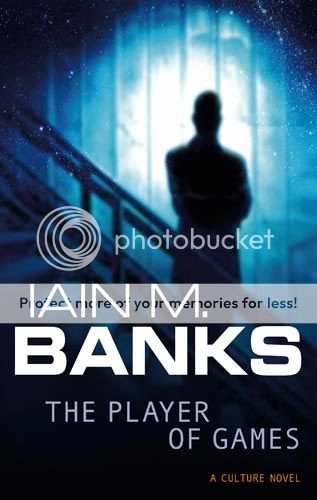
REVIEW: THE PLAYER OF GAMES

Cover Image: Getty Images
Cover Design: Blacksheep

THE PLAYER OF GAMES
A CULTURE NOVEL/
CULTURE BOOK TWO
BY
IAIN M. BANKS

ISBN: 978-1-85723-146-5 
Pages: 309
Publisher: Orbit
Publishing Date: 1988

On the cover:

The Culture - a human/machine symbiotic society - has thrown up many great Game Players, and one of the greatest is Gurgeh. Jernau Morat Gurgeh. The Player of Games. Master of every board, computer and strategy.


Bored with success, Gurgeh travels to the Empire of Azad, cruel and incredibly wealthy, to try their fabulous game ... a game so complex, so like life itself, that the winner becomes emperor. Mocked, blackmailed, almost murdered, Gurgeh accepts the game, and with it the challenge of his life - and very possibly his death.

   The central premise of this novel is games, or to be more specific, a game that is complex enough to run an empire. Not the most common of science fiction principles, but a very interesting one.
    Banks is very adept at getting his concept across to the reader. First by introducing us to the game-player Gurgeh and his life. Through Gurgeh we get a very good idea of how the Culture treats games, and what position they have in society. The introduction of a world run by a game is done in such a way that you never get the feeling that Banks is talking about something hypothetical, but instead it feels both plausible and real.

   The story itself is great, it has the plausibility that in my opinion is needed to get immersed in SFF, and it doesn't lack in suspense. Banks manages to keep the info dumping integrated to the story, and it doesn't slow down the narrative.
   It is a rather short book, and is a quick read. That doesn't mean that it lacks complexity. There are many parallels to our world here, and if you feel like it this is a novel that is a great springboard for analysis. Even the descriptions of the Culture's differences to the Empire of Azad serves to highlight that we are in a wholly different world from what we know. But at the same time it is not lacking in references to real-world society.

   There is much to learn about the Culture here. And as this is the second novel Banks has written about the Culture, that is a good thing. He is expanding on his creation too great effect. And the shadow of the much larger world that exists outside the novel is very much present.
  
   This book is not an action-filled space adventure, but an immersion into a different culture in a future setting. It is a type of social science fiction I thoroughly enjoyed. If you are at all interested in science fiction for more than big guns and spaceships I advise you to read this book, it is one I know I will re-read sometime in the future.

Note: This novel is marked correctly by the publisher as "A Culture Novel". It is not a direct continuation of the events in Consider Phlebas, the novel that preceded it. But it is set in the same universe, and although the two novels are very different, they are part of a series.

Review: Consider Phlebas

Links: Iain M. Banks  Orbit

18 January, 2011

I'M BACK! / READING HIGHLIGHTS OF 2010

I'M BACK!

   After over a month with a computer that seizes up after 5-15 minutes, I have finally gotten a computer that works as it should again. This is quite a relief, it's been a pain being cut off from interacting with all the nice people I've gotten to know in the last year. Most of these I've met through Twitter. I could mention names, but I'll go with the Norwegian saying:  No-one mentioned, no-one forgotten.

    I also missed being able to blog a lot. I have of course been reading quite a bit, and have some reviews lined up for the blog. 2010 has been a sort of test year for me when it comes to blogging, and it is something I want to continue doing. I'm planing to post 2-3 reviews a week on the blog from now on. The first one will be up later today (European time).
    I hope you will follow the blog in the future, whether you're here for the first time, or if you are a regular visitor.


READING HIGHLIGHTS OF 2010

   These are some of the books that I have appreciated reading the most in 2010. Not all of them were published in 2010, and I have not reviewed all of them. Some of them I read before I started reviewing, and some of them will be reviewed on the blog later.

-I'll start at the beginning, with the first book I read last year, one I got for Christmas in 2009:

PANSERHJERTE by Jo Nesbø

This is of course the original Norwegian edition, published by Aschehoug in 2009. It's a great book, Nesbø just keeps getting better.

The English edition is called The Leopard, and is published by Random House this Thursday (20 January).

Note: The Norwegian title translates as Iron Heart/ Heart of Iron. Or more directly Armor Heart/Heart of Armor. (Panser=armor, hjerte=heart.)

  THE PARASOL PROTECTORATE BOOKS by Gail Carriger

  Soulless (review) came out in 2009, and has since been followed by Changeless
  (review) and Blameless in 2010.

  The humor and action in these books have made them favorites of mine. They are not
  the type of books I would typically look for, so I am grateful that I discovered these
  through Twitter.
  Note: I have already read Blameless, and will review it soon.

LEGENDS OF THE RED SUN by Mark Charan Newton

Nights of Villjamur (review) was published in 2009 and was followed in 2010 by
City of Ruin (review).

 A more or less city-bound fantasy series. Interesting and different from the myriad Tolkienesque fantasy books out there. Book three is on the way, and Mark said on Twitter that he is already 10.000 words into book four. (Hope that wasn't supposed to be a secret, Mark.)


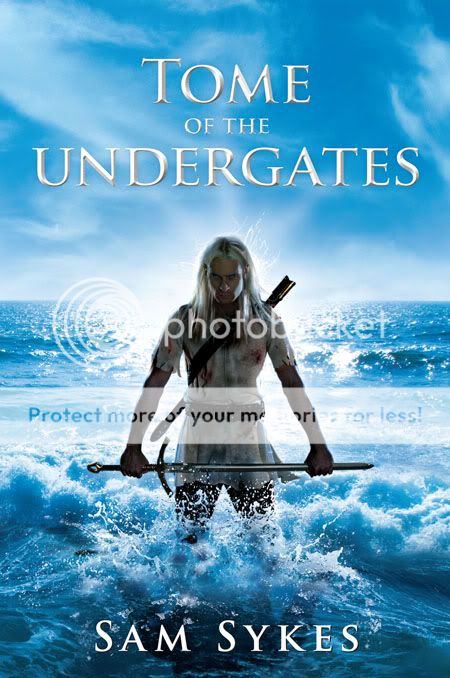
TOME OF THE UNDERGATES by Sam Sykes


Tome of the Undergates (review) is a 2010 debut novel.


This is action-packed Sword and Sorcery that manages to both be classic in style, and a fresh breath in today's fantasy landscape. 
Book two, Black Halo, is coming later this year. And I'm eagerly awaiting it.


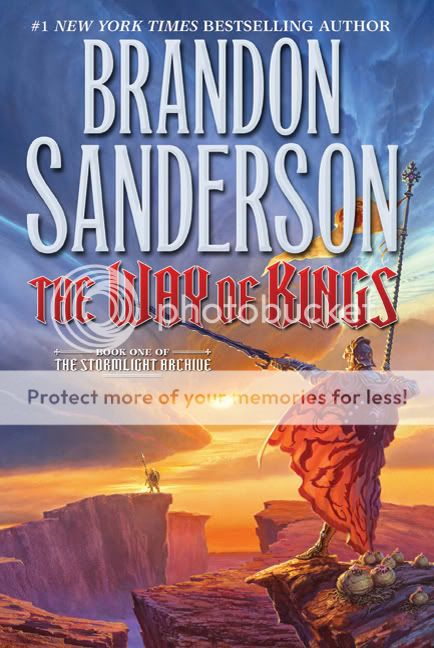
THE WAY OF KINGS by Brandon Sanderson


The Way of Kings (review), published in 2010, this is the first of what is said to be ten books in The Stormlight Archive.


I really liked this book, and although I look forward to reading the rest of the series, I don't particularly look forward to the long wait until the last book is published.
If I remember correctly six years was mentioned.


INVISIBLE FIENDS: MR MUMBLES by Barry Hutchison


Invisible Fiends: Mr Mumbles (review) is another 2010 debut.


This is marketed as a children's book (9+), but I found it worked as a Horror novel for all ages. 
It is another book/author I've discovered through Twitter.
Book two, Invisible Fiends: Raggy Maggie, is already out.


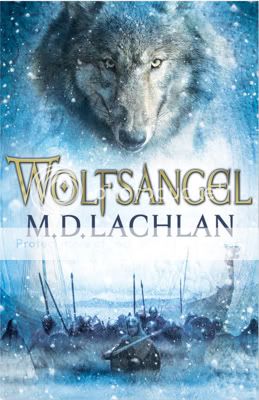
WOLFSANGEL by M.D. Lachlan


Wolfsangel is a 2010 debut for M.D.Lachlan, but the author behind the pseudonym has published several books before.


Fantasy set in the lands of the old Norse Sagas.
I'll review this later in the week.


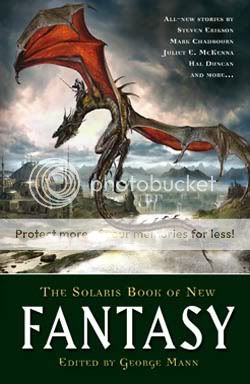
THE SOLARIS BOOK OF NEW FANTASY edited by George Mann


This collection of short stories was published in 2007. 


I won't say much about it here. But I have included it in my highlights of 2010 for a reason. A review will be coming shortly.


   This post is starting to approach the point where it's getting very long, so I'll round off with mentioning a couple of authors that I've read for the first time in 2010.

-IAIN M. BANKS: I've heard of him for years, and started on his Culture novels in 2010. I read Consider Phlebas (review) and The Player of Games -review coming up soon.


-IAN McDONALD: Also an author I've heard lots about, but never gotten around too before 2010. River of Gods (review) and Brasyl (review coming up), are the two I've gotten through.

26 November, 2010

REVIEW: CONSIDER PHLEBAS

Cover design and photo: Blacksheep

CONSIDER PHLEBAS
A CULTURE NOVEL/
CULTURE BOOK ONE
BY
IAIN M. BANKS
ISBN: 978-1-85723-138-0
Pages: 467
Publisher: Orbit
Publishing date: 23 April 1987

On the cover:

The war raged across the galaxy. Billions had died, billions more were doomed. Moons, planets, the very stars themselves, faced destruction, cold-blooded, brutal, and worse, random. The Idirans fought for their Faith; the Culture for its moral right to exist. Principles were at stake. There could be no surrender.


Within the cosmic conflict, an individual crusade. Deep within a fabled labyrinth on a barren world, a Planet of the Dead proscribed to mortals, lay a fugitive Mind. Both the Culture and the Idirans sought it. It was the fate of Horza, the Changer, and his motley crew of unpredictable mercenaries, human and machine, actually to find it, and with it their own destruction.
 
   This is Banks' first Culture novel, but it is by no means set in an unfinished world, or more correctly; universe. There is plenty of references to other events and history here. And one of the strengths of the book is Banks' universe-building. Some of the places we see here are absolutely stunning, and adds a lot to the story.

   The story has all the ingredients of a space opera. There's a huge war going on in the background, our hero is a rogue type character who is being hunted, and we have a quest that takes us to different locations. But this story is by no means hampered by Banks' use of the familiar. He writes a story that really stands out from the crowd. The characters are also interesting, and we get to know them pretty well as the story unfolds.
  
    Consider Phlebas is pretty fast-paced. There is something happening all the time, but it is not stressful to follow what is going on. Some of the action sequences here are just mind blowing, and I have to say that I wouldn't mind seeing them up on the big screen.
   Banks is very good at keeping the suspense up, and especially the ending keeps the reader guessing. There is not much of the techno babble that scare away newcomers and slows the pace down here.

   This is the first of the Culture novels, but I would like to point out that it is a self contained story. There is no cliffhanger ending, and you should be no means be scared away from reading it just because there is a whole series of novels that follow it.
   There is much to love here for fans of science fiction. And if you are a newcomer to the genre this, in my opinion, would be a good place to start. For myself, I've already bought the next Culture novel, and plan to purchase the rest.

Links: Iain M. Banks  Orbit